What is Reiki? A Beginner's Guide to Energy Healing
Discover the ancient Japanese healing art of Reiki — what it is, how it works, and why thousands across India are turning to it for physical, emotional, and spiritual wellness.
Reiki is a complementary practice. It supports relaxation and well-being and may help you feel better, but it does not diagnose, treat or cure any illness. Please keep following your doctor’s advice and medicines.
What is Reiki?
Reiki (pronounced ray-kee) is a Japanese energy healing technique developed in the early 20th century by Mikao Usui. The word itself breaks down beautifully — Rei means "Universal" and Ki means "Life Energy." Together, Reiki means the universal life energy that flows through every living being.
This invisible energy is the same force that keeps your heart beating, your cells regenerating, and your thoughts flowing. When this energy is balanced and flowing freely, you feel healthy, calm, and alive. When it is blocked or depleted — due to stress, trauma, grief, or illness — the body and mind begin to struggle.
How Does a Reiki Session Work?
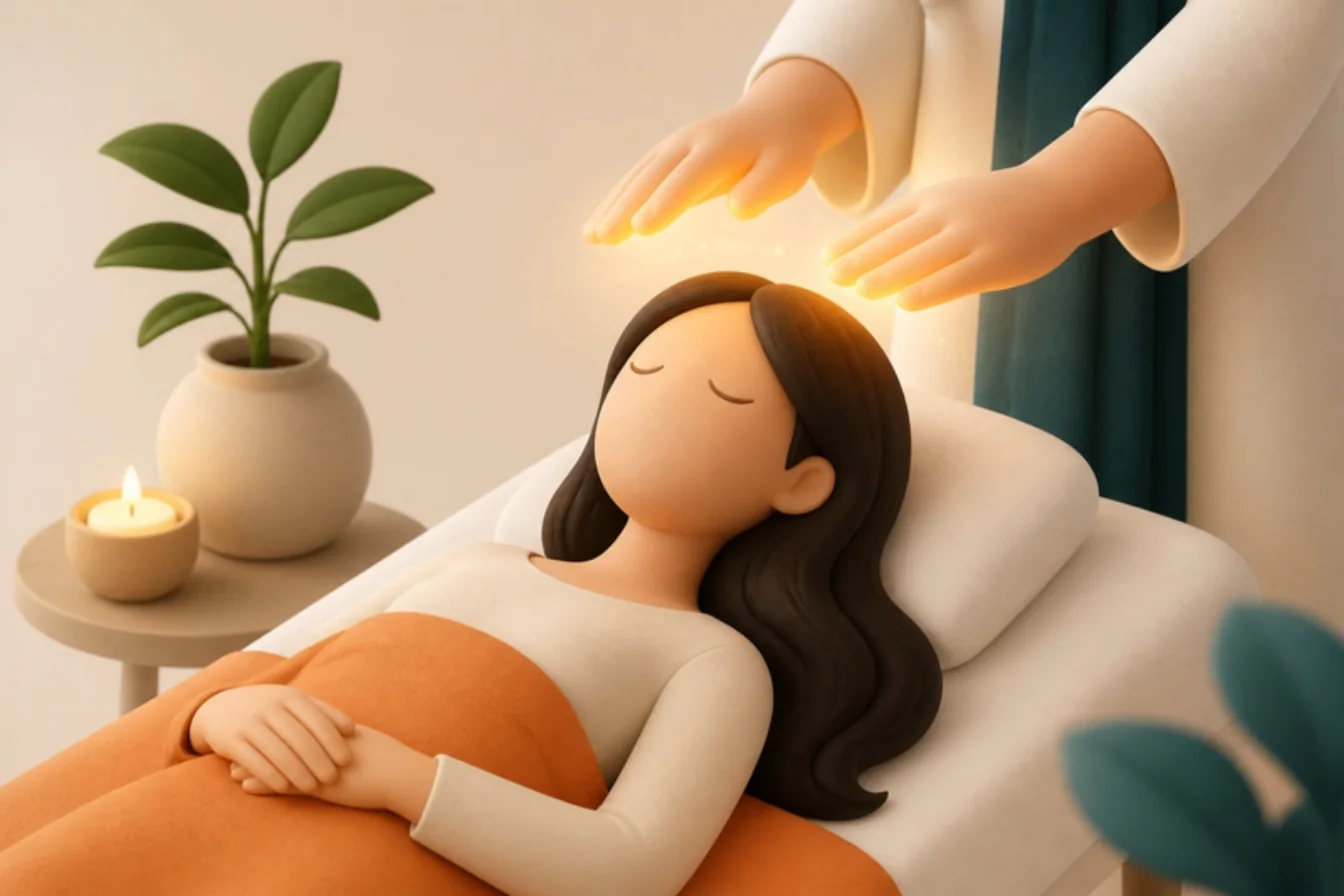
During a Reiki session, a trained practitioner places their hands lightly on or just above specific areas of the body. They act as a channel, allowing universal energy to flow through them and into the recipient. The energy naturally goes where it is needed most. Most people report feeling:
- Deep warmth or tingling in the body
- A profound sense of calm and peace
- Release of emotional heaviness
- Improved sleep after sessions
- Clarity of mind
A single session typically lasts 45–60 minutes. You remain fully clothed throughout.
What Can Reiki Help With?
Reiki is not a medical treatment, but it works beautifully alongside conventional medicine. People seek Reiki for:
- Stress and anxiety — calming the nervous system at a deep level
- Chronic pain — releasing energetic blocks that manifest as physical discomfort
- Grief and emotional healing — processing loss without suppression
- Sleep disorders — quieting the mind that refuses to rest
- Spiritual growth — deepening connection with your inner self
- Pre and post surgery — supporting recovery and reducing fear
Is Reiki a Religion?
No. Reiki is a spiritual practice but it is not tied to any religion. People of all faiths — Hindu, Muslim, Christian, Jain — practice and benefit from Reiki. It works on the universal principle that all life is energy, which transcends religious boundaries.
How Do I Learn Reiki?
Reiki is traditionally taught in levels. At our centre, the foundation is the Reiki Level 1, 2 & 3A Certification:
- Level 1: healing on 24 points of the body to cleanse it and clear blockages
- Level 2: balancing the 7 chakras with three symbols, Cho Ku Rei, Sei He Ki and Hon Sha Ze Sho Nen, and distance healing
- Level 3A: building your Reiki kavach (protective shield) with four symbols, including the master symbol Dai Ko Myo
After that come the Level 3B courses: Reiki Advanced Healer, Reiki Master (the teacher level) and Reiki Grand Master.
Each level involves a sacred ceremony called Shaktipat or attunement, performed by the Grand Master, which opens your energy channels permanently.
Your First Step
If you are curious about Reiki, the best first step is simply to experience a session. Let the energy speak for itself. Thousands of students across India have started exactly where you are today — with a simple question: What is Reiki?
Written by the team at Shree Sai Yog & Reiki Healing Centre (Surat & Bengaluru). Reiki supports healing; it does not replace medical care.